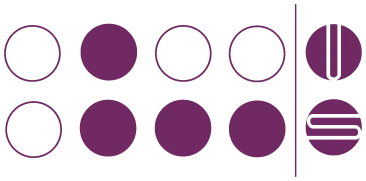
Compute doesn’t have to think in two states.
Gressus is building analog and multi-state hardware for a field that’s spent sixty years assuming binary was the best or only option. Our first product is an AI accelerator running on M16 architecture: sixteen distinct physical states per "stit", not two.
Two states was always a compromise, not a law of computing
Binary won because it was easy to build reliably at scale, not because it was the best way to represent the world. Here's the same paragraph, encoded two ways so you can see the difference for yourself!
The arithmetic for neural networks and computational fluid dynamics starts by reasoning in continuous space and time, but binary converts those continuous concepts into discrete values to solve them on a computer. Every weight, velocity, and pressure term can be an array of values, not a switch. Binary hardware can only represent those options by stacking bits, so every multiply spends cycles carrying, rounding, and re-normalizing before the next operation can even begin. The precision you actually need gets rebuilt one bit at a time, at real cost in hardware, time, and energy.
584 UTF-8 bytes × 8 binary digits each = 4,672 total digits. Every byte costs 4× fewer physical units on M16 than on binary.
Zoom out further: Unicode defines 1,112,064 possible characters. Naming any single one of them takes 21 binary digits — or just 6 M16 states.
Type anything — see what it costs to represent
7 UTF-8 bytes → 56 binary digits
Sixteen modes, one physical unit
Where a transistor settles into one of two states, an M16 stit holds one of sixteen. This increases the amount of data per interconnect significantly, speeding up computation. It’s a different way of building the same underlying idea, and it’s the foundation everything else at Gressus is built on.
Read the technical overview →Two People, One Goal, Zero Compromise
We believe in the power of people and that creativity and perseverance in the face of adversity is the driving force of innovation. This ideology drove us to pursue multi-state computing in a world that is built around binary. We believe in pivots when needed, and as we are a lean team, we are all ears to advice and feedback, and we know we won't get everything right but, we are headstrong in our vision of a world where technology betters the lives of humanity across the globe, not just in "desirable" markets.
Learn from others and build better from what others have learned.